
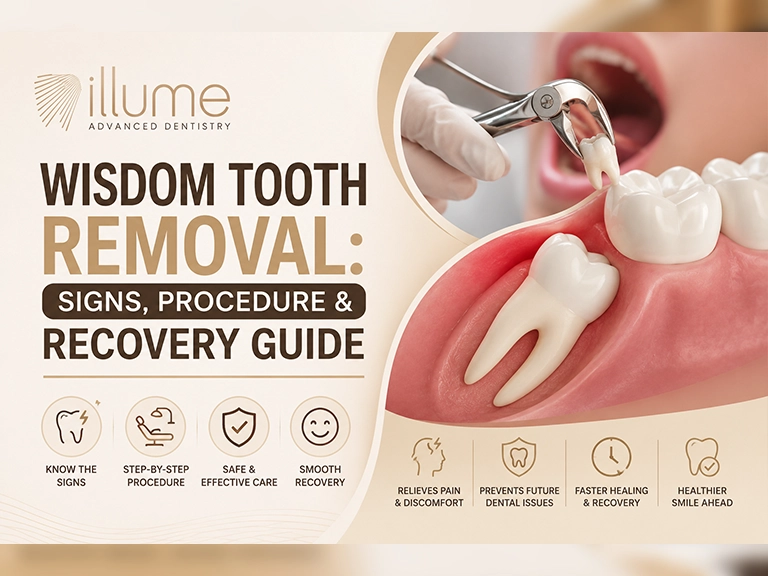
What are wisdom teeth?
Wisdom teeth are the third molars at the back of your mouth, usually appearing between ages 17 and 25. Many people do not have enough space for them, which can cause problems that require removal.
Signs your wisdom tooth needs removal
- Pain or pressure at the back of the mouth.
- Swollen, red or infected gums around the tooth.
- Difficulty opening the mouth or chewing.
- A partly erupted or impacted tooth.
- Crowding or damage to neighbouring teeth.
- Repeated food trapping and decay.
What happens during wisdom tooth removal?
- Examination and X-ray to assess the tooth's position.
- Local anaesthesia to numb the area completely.
- Removal — the tooth is gently loosened and taken out.
- Stitches if needed and gauze to control bleeding.
The procedure is comfortable, and sedation is available for anxious patients.
Recovery tips after wisdom tooth removal
- Bite gently on gauze to control bleeding.
- Apply a cold pack to reduce swelling on the first day.
- Eat soft, cool foods and avoid using a straw.
- Do not smoke, as it delays healing.
- Rinse gently with salt water after 24 hours.
- Take prescribed medication as advised.
Frequently asked questions
Does wisdom tooth removal hurt?
No. It is done under local anaesthesia so you feel pressure but not pain. Mild soreness afterwards is managed with prescribed medication.
How long is recovery?
Most people recover within 3–7 days, with swelling easing after the first two to three days.
Do all wisdom teeth need to be removed?
No. Healthy, well-positioned wisdom teeth that cause no problems can be left in place. Removal is needed only when they cause issues.
Can I eat after the extraction?
Yes, stick to soft, cool foods for the first day and avoid the extraction site while chewing.
What should I avoid after removal?
Avoid smoking, straws, hard or hot foods, and vigorous rinsing for the first 24 hours to protect the healing clot.
Comfortable, safe extractions. Call +91 9600909202 or book online.