
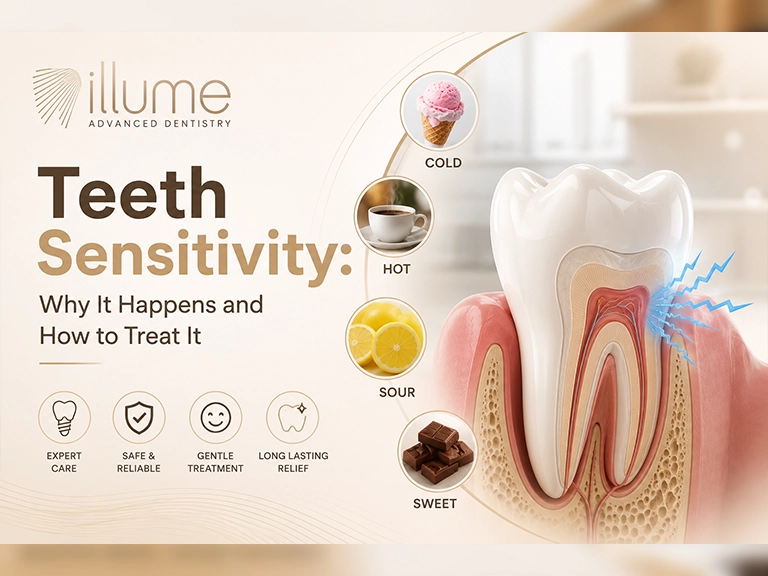
What causes sensitive teeth?
- Worn enamel from hard brushing or acidic foods.
- Gum recession exposing the tooth root.
- Cavities or cracked teeth.
- Teeth grinding (bruxism).
- Recent dental work (usually temporary).
- Worn fillings or exposed dentine.
How to treat teeth sensitivity
- Use a desensitising toothpaste designed for sensitive teeth.
- Brush gently with a soft-bristled brush.
- Avoid acidic foods and drinks that erode enamel.
- Wear a night guard if you grind your teeth.
- See a dentist to treat cavities, cracks or gum recession.
When to see a dentist
If sensitivity is severe, sudden, or focused on one tooth, it may signal a cavity, crack or exposed nerve that needs treatment. A dentist can identify the cause and provide targeted relief such as fluoride application, a filling, or a crown.
Can sensitivity be prevented?
Yes — gentle brushing, limiting acidic foods, treating grinding, and regular check-ups all help protect enamel and prevent sensitivity from developing or worsening.
Frequently asked questions
Why are my teeth suddenly sensitive?
Sudden sensitivity can come from worn enamel, gum recession, a cavity, a crack or grinding. A dentist can pinpoint the cause.
Does sensitive toothpaste really work?
Yes. Desensitising toothpaste can reduce sensitivity over a few weeks of regular use by calming the nerve response.
Is teeth sensitivity a sign of a serious problem?
Not always, but persistent or one-tooth sensitivity can indicate a cavity or crack, so it is worth a dental check.
Can whitening cause sensitivity?
Temporary sensitivity after whitening is common and usually settles within a day or two.
How can I prevent sensitive teeth?
Brush gently, limit acidic foods, treat grinding, and keep up regular dental check-ups.
Find the cause and fix it. Call +91 9600909202 or book online.